
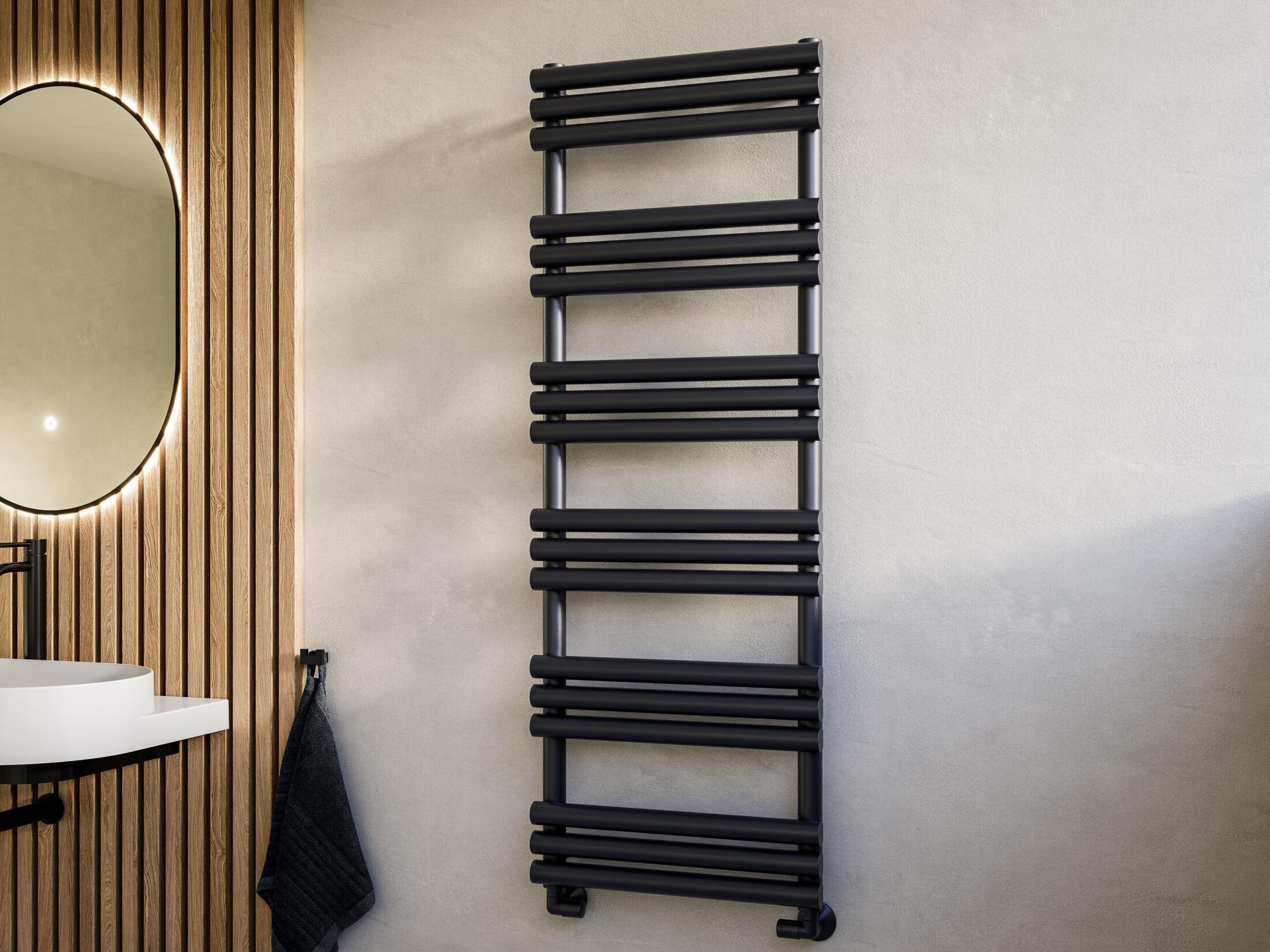
Finding the Perfect Heated Towel Rail
Heated towel rails have become an important feature within contemporary bathroom design, combining comfort, practicality, and clean visual styling. Once considered an additional feature, heated towel rails are now widely used by homeowners looking to create bathrooms that feel comfortable, functional, and well considered throughout the year.
Alongside keeping towels warm and dry, the right heated towel rail can also contribute to heating the room itself while supporting the overall appearance of the bathroom.
However, with different sizes, finishes, and heating options available, choosing the right towel rail requires careful consideration.
In this guide, we explore everything you need to know before selecting a heated towel rail, including BTU ratings, sizing, finishes, and installation options.
Why Heated Towel Rails Are So Popular
Heated towel rails offer far more than simply warm towels.
Modern towel rails help:
- Warm the bathroom efficiently
- Keep towels dry and fresh
- Reduce excess moisture within the room
- Improve everyday comfort
- Contribute to the overall bathroom layout and finish
Available in a wide range of finishes and sizes, heated towel rails can either integrate subtly into the room or introduce stronger visual contrast within the wider design.
Understanding BTU Ratings
One of the most important considerations when choosing a heated towel rail is the BTU rating.
BTU stands for British Thermal Unit and measures the heat output produced by the towel rail over time. In simple terms:
- A higher BTU rating means greater heat output
- Higher output rails warm the room more effectively
- Correct heat output improves comfort and efficiency
Choosing a towel rail with sufficient BTU output is important if you want it to contribute to heating the bathroom as well as warming towels.
In many cases, selecting a towel rail with slightly higher output than the minimum requirement can provide additional flexibility during colder months while maintaining comfortable room temperatures throughout the year.
Choosing the Right Heated Towel Rail Finish
The finish of a heated towel rail can significantly influence the overall appearance of the bathroom.
When selecting a finish, it is important to decide whether the towel rail should:
- Integrate subtly into the design
- Create tonal contrast within the room
- Coordinate with existing brassware and fittings
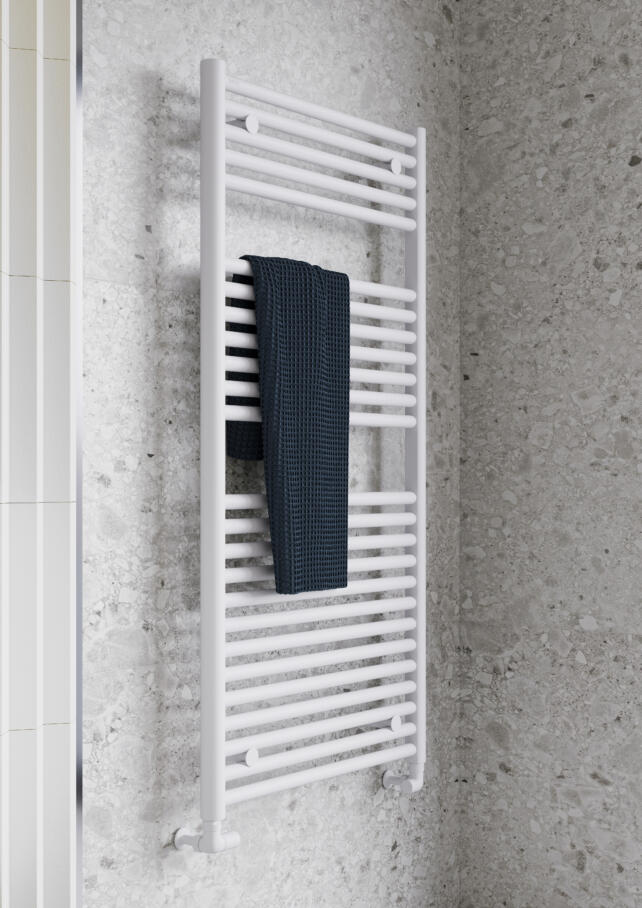
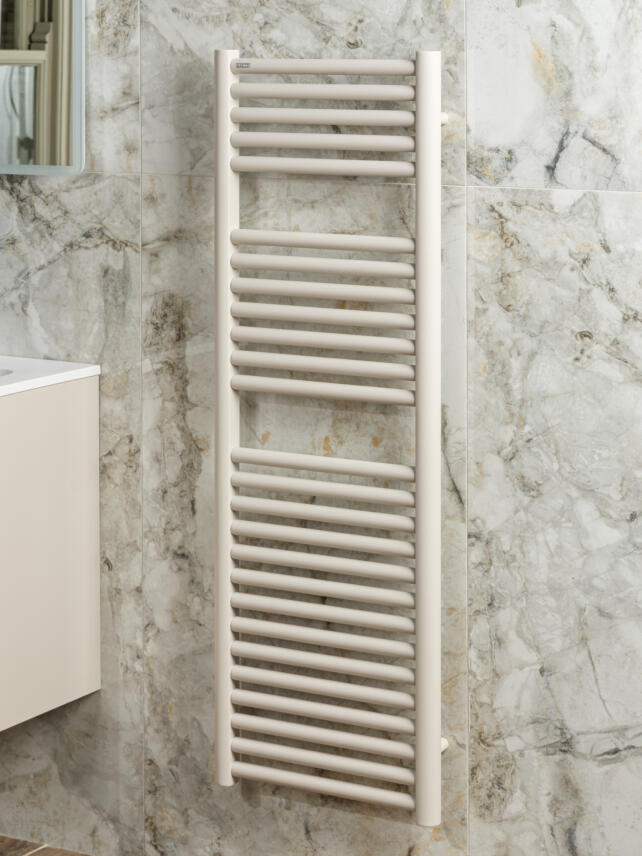
The Hugo2 Heated Towel Rail Collection is available in six finishes:
- Matt Black
- Anthracite
- Arabica
- Lusso Grey
- Mont Blanc
- Chrome
The Hugo Evolute Collection is available in two finishes:
- Matt White
- Soft Taupe
Chrome remains a widely used and versatile option, while darker finishes such as Matt Black and Anthracite introduce stronger visual definition within contemporary bathroom layouts.
It is also worth noting that chrome towel rails can sometimes have slightly lower BTU outputs compared to textured or painted finishes.
Choosing the Correct Heated Towel Rail Size
The ideal towel rail size depends on:
- The dimensions of the bathroom
- The heat output required
- The number of towels being stored
- Whether the rail will act as the primary heat source
In smaller bathrooms or en-suites, a heated towel rail may provide sufficient warmth for the entire room without requiring an additional radiator.
Larger bathrooms, however, may require:
- A larger towel rail
- Higher BTU output
- Supplementary heating
Choosing a towel rail that exceeds the minimum heating requirement can provide greater flexibility across different seasons while helping maintain a consistently comfortable bathroom environment.
Electric, Central Heating or Dual Fuel?
One of the biggest decisions when selecting a heated towel rail is choosing the most suitable heating method for your home and lifestyle.
Electric Heated Towel Rails
Electric towel rails are particularly well suited to:
- Homes without central heating
- Bathroom renovations
- Faster installation projects
- Independent summer heating
Because they operate independently from the main heating system, electric towel rails allow homeowners to continue warming towels throughout the year.
They are also relatively straightforward to install by a qualified electrician and can often be fitted without major plumbing work.
Tissino towel rails can be professionally converted into electric towel rails using an appropriate heating fluid and heating element.
Central Heating Towel Rails
For homes with existing central heating systems, towel rails can often be connected directly into the heating system in the same way as a traditional radiator.
This option:
- Integrates with the home’s heating system
- Provides strong heat output
- Supports efficient room heating
- Keeps towels warm during colder months
Tissino towel rails are designed to provide sufficient BTU output to warm both towels and the bathroom space itself.
Dual Fuel Heated Towel Rails
Dual fuel towel rails combine the benefits of both electric and central heating systems.
A dual fuel rail:
- Connects to the home’s central heating
- Includes an independent electric heating element
- Allows year-round towel warming
- Provides greater flexibility across different seasons
This allows the towel rail to operate with the main heating system during winter while still functioning independently during warmer months when central heating may not be switched on.
Dual fuel systems are particularly popular in bathrooms where year-round comfort and flexibility are priorities.
Where Should a Heated Towel Rail Be Positioned?
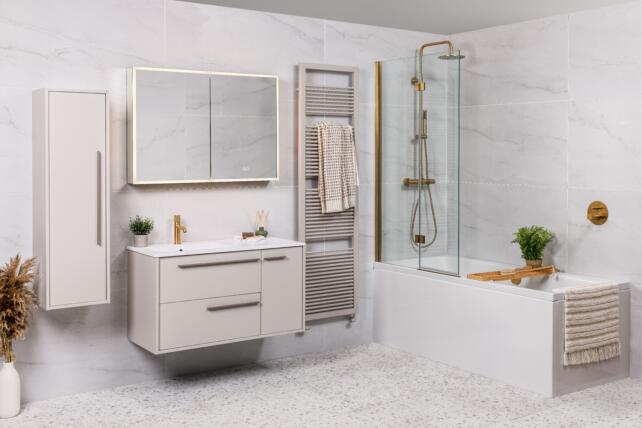
Placement plays an important role in both the efficiency and practicality of a heated towel rail.
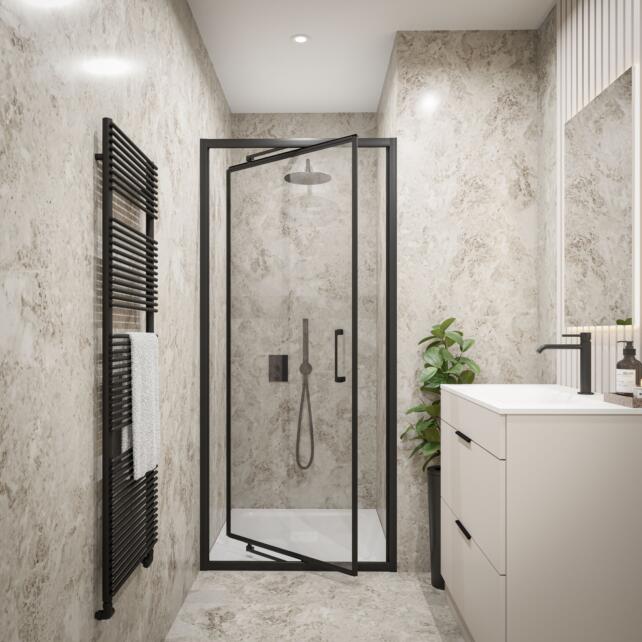
In many cases, positioning the rail on the coldest wall within the room, often an external wall, helps distribute heat more evenly throughout the bathroom.
It is also important to consider:
- Proximity to the bath or shower
- Existing pipework
- Door openings
- Overall bathroom layout
- Nearby fittings and furniture
Positioning the towel rail within comfortable reach of the bath or shower can significantly improve everyday usability, particularly during colder months.
Safety Considerations for Heated Towel Rails
When installing electric or dual fuel towel rails, it is essential to follow bathroom electrical safety regulations.
Different electrical products carry different safety ratings which determine how closely they can be positioned near water sources such as baths, showers, and basins.
Always follow installation guidance carefully and use qualified professionals to ensure the towel rail is installed safely and correctly.
Heated Towel Rails Combine Comfort and Practicality
The most successful heated towel rails combine:
- Efficient heating
- Practical functionality
- Contemporary styling
- Long-term durability
Whether choosing a minimalist Matt Black finish or a more traditional Chrome design, selecting the right towel rail can improve everyday comfort while contributing to a more cohesive bathroom layout.
By carefully considering finish, size, heat output, and installation type, it is possible to create a bathroom environment that feels comfortable, practical, and designed for long-term use throughout the year.
About Heated Towel Rails
Frequently Asked Questions
BTU stands for British Thermal Unit and measures the heat output of the towel rail. Higher BTU ratings indicate greater heating performance.
Yes. In smaller bathrooms or en-suites, a heated towel rail may provide sufficient heat to warm the room as well as towels.
Electric towel rails operate independently, while dual fuel rails connect to central heating and also include an electric heating element for year-round use.
Modern heated towel rails are generally energy efficient, particularly when correctly sized for the bathroom.
Heated towel rails are often best positioned on the coldest wall within the bathroom and within convenient reach of the bath or shower.
Chrome remains a widely used option, while Matt Black and Anthracite finishes have become increasingly popular within contemporary bathroom design.