
How to bring Feng Shui into your bathroom
As bathrooms increasingly become spaces associated with relaxation and wellbeing, many homeowners are looking beyond aesthetics alone and considering how design can influence comfort, balance, and atmosphere within the home.
Feng Shui, an ancient Chinese philosophy centred around harmony and energy flow, continues to influence contemporary interiors because of its focus on creating calmer and more intentional living spaces.
In bathroom design particularly, many of the principles associated with Feng Shui naturally align with modern preferences for spa-inspired layouts, softer materials, uncluttered spaces, and wellness-led interiors.
We spoke with Kora Hume, Director at Quarrybank Boutique Bathrooms, to explore how Feng Shui principles can be introduced into bathroom design and how thoughtful choices can help create spaces that feel calmer, softer, and more restorative.

What Is Feng Shui?
Feng Shui is an ancient Chinese practice focused on arranging spaces in ways that encourage balance and positive energy flow, often referred to as “Chi”.
The philosophy centres around balancing five natural elements:
- Water
- Fire
- Earth
- Wood
- Metal
By creating harmony between these elements, Feng Shui aims to support:
- Wellbeing
- Relaxation
- Emotional balance
- Comfort within the home
- A calmer everyday environment
Although Feng Shui has existed for centuries, many of its core principles continue to influence modern interior design because of the growing emphasis on mindful and wellness-focused living.
The CHI energy comes through the door, so what we see and feel immediately after opening the door will make a huge impact.
Why Feng Shui Principles Work Well in Bathrooms
Bathrooms naturally lend themselves to wellbeing-led design because they are already associated with routine, comfort, and self-care.
From a Feng Shui perspective, bathrooms are spaces where energy can escape due to the movement of water. Because of this, thoughtful layouts, calming materials, and considered organisation are often used to create a greater sense of balance within the room.
According to Kora, introducing Feng Shui-inspired design choices can help bathrooms feel:
- Calmer
- More restorative
- Less visually overwhelming
- More emotionally grounding
Many of these ideas already overlap with contemporary bathroom design, particularly the move towards spa-inspired interiors and softer, more resolved spaces.
Start with Natural Colours and Materials
One of the easiest ways to introduce Feng Shui principles into a bathroom is through the use of natural colours and organic textures.
Earth-inspired tones help soften the overall atmosphere while creating warmth and visual balance.
Popular finishes include:
- Soft neutrals
- Warm beige tones
- Stone colours
- Pale taupe shades
- Natural oak finishes
- Slate and textured surfaces
Natural materials help create a stronger connection to nature while preventing the bathroom from feeling overly clinical or hard-edged.
Collections such as Cosenza Natural Oak introduce warmth and texture while maintaining the clean lines associated with contemporary bathroom design.
These softer material choices work particularly well alongside minimalist layouts and layered lighting.
Curved Shapes Create Softer Spaces
Feng Shui often favours softer, rounded forms over sharp corners and rigid geometry.
Curved shapes are believed to encourage a gentler flow throughout the room while helping spaces feel calmer and more welcoming.
Within bathroom design, this can be introduced through:
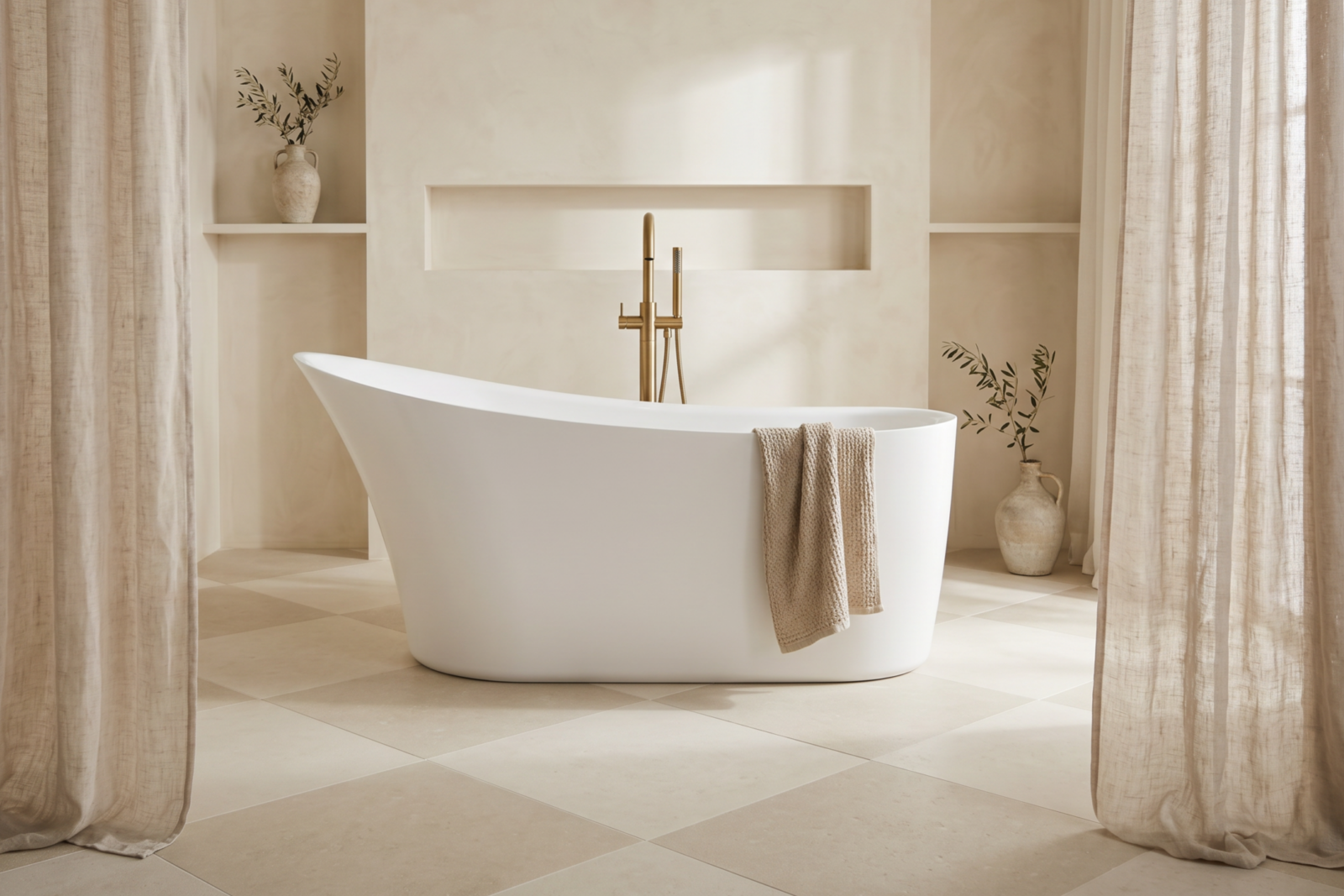
- Freestanding baths
- Rounded mirrors
- Curved-edge furniture
- Softer basin forms
- Organic silhouettes
Collections such as Tanaro and Angelo use softer contours and sculptural forms to create bathrooms that feel more relaxed and visually balanced without becoming overly decorative.
Kora particularly highlights curved furniture and freestanding baths as effective ways to soften bathroom spaces that might otherwise feel overly structured.
I am a huge fan of curved edged furniture, organic shaped mirrors and freestanding baths as they bring in feminine energy in often, very masculine bathrooms.
Bring Natural Elements Into the Bathroom
Natural elements are central to both Feng Shui and contemporary wellness-focused interiors.
Introducing greenery into the bathroom can help:
- Add softness and texture
- Create a calmer atmosphere
- Balance harder surfaces
- Strengthen the connection to nature
Plants work especially well when paired with:
- Natural wood finishes
- Stone textures
- Neutral palettes
- Soft layered lighting
Even small additions can help make the bathroom feel more restorative and less purely functional.
Keep the Layout Calm and Uncluttered
A key principle associated with Feng Shui is maintaining openness and reducing visual disruption within the home.
In practical bathroom design, this often translates to:
- Clear layouts
- Concealed storage
- Minimal clutter
- Open floor space
- Thoughtful organisation
Wall-hung furniture and integrated storage solutions can help bathrooms feel lighter and easier to navigate while maintaining a more resolved appearance.
Collections such as Stratto wall-hung furniture support this cleaner architectural feel while helping maximise usable floor space.
A calmer visual environment often improves not only functionality, but also the overall sense of relaxation within the room.
Lighting and Atmosphere Matter
Feng Shui focuses heavily on atmosphere and sensory balance, not simply visual appearance.
Soft layered lighting helps create a calmer environment, particularly when combined with warmer textures and natural finishes.
Popular additions include:
- Ambient lighting
- Candles
- Diffusers
- Essential oils
- Softer mirror lighting
Warm scents such as lavender, sandalwood, or eucalyptus can also contribute to a more restorative environment.
According to Kora, these smaller sensory details often make a significant difference to how a bathroom feels emotionally as well as visually.
Feng Shui Should Feel Personal
One of the most important points Kora emphasises is that Feng Shui should not feel overly rigid or prescriptive.
Instead, the goal is to create a bathroom that feels personally calming and supportive of everyday routines.
This often starts with considering:
- How you want the space to feel
- Which materials feel comfortable
- Which colours feel calming
- How the room functions day to day
Rather than chasing perfection, the focus is on creating balance and comfort through thoughtful choices and restrained design decisions.
Wellness-Led Bathroom Design Continues to Grow
Many principles associated with Feng Shui naturally overlap with the wider shift towards wellness-focused bathroom design.
Features such as:
- Spa-inspired layouts
- Natural materials
- Softer shapes
- Minimalist storage
- Layered lighting
- Calmer colour palettes
continue to influence modern bathroom interiors because they help create spaces that feel more restorative and easier to live with long term.
Feng Shui adds another layer to this thinking by encouraging homeowners to consider not only how a bathroom looks, but how it feels to spend time in.
Creating a Bathroom That Feels Calm and Balanced
Whether fully embracing Feng Shui principles or simply taking inspiration from them, introducing more softness, balance, and natural texture into the bathroom can significantly influence the atmosphere of the space.
Through thoughtful layouts, layered materials, and restrained design choices, it’s possible to create bathrooms that feel calm, restorative, and highly personal without compromising practicality or contemporary styling.
Frequently Asked Questions About Feng Shui Bathrooms
Feng Shui is an ancient Chinese philosophy focused on arranging spaces to encourage balance and positive energy flow within the home.
Bathrooms are closely linked with water flow and wellbeing, making thoughtful layout and atmosphere especially important within Feng Shui-inspired design.
Soft neutrals, earthy tones, warm whites, stone shades, and natural colours are commonly used to create a calm and balanced atmosphere.
Yes. Plants help introduce softness, texture, and a stronger connection to nature within the bathroom.
Curved and organic shapes are often preferred because they help create softer and more relaxed spaces.
Natural materials, soft lighting, uncluttered layouts, layered textures, and restrained colour palettes can all help create a calmer bathroom environment.