
What are the different types of acrylic bath tubs?
Acrylic baths remain one of the most widely used choices within contemporary bathroom design, combining durability, practicality, comfort, and design flexibility. Their lighter construction and wide range of available styles make them suitable for everything from compact family bathrooms to larger freestanding bathing spaces.
Whether planning a full renovation or replacing an existing bath, understanding the different types of acrylic baths available can help identify the most appropriate solution for your bathroom layout and everyday use.
From classic single ended baths to sculptural freestanding designs, this guide explores the different types of acrylic baths and the qualities that continue to make acrylic one of the most popular bath materials available today.
Why Acrylic Baths Continue to Be So Popular
Acrylic baths remain widely used because they balance practicality with comfort and versatility.
Some of the main benefits of acrylic baths include:
- Lightweight construction
- Easier installation
- Good durability
- A warmer surface feel
- Straightforward maintenance
- Broad design flexibility
- A wide range of shapes and sizes
Unlike heavier bath materials, acrylic naturally feels warmer to the touch, helping create a more comfortable bathing experience.
Acrylic is also a non-porous material, making it easier to clean and resistant to everyday moisture absorption.
How Acrylic Baths Are Manufactured
Most acrylic baths are produced using vacuum-formed acrylic sheets, typically reinforced to improve structural strength and durability.
Higher quality acrylic baths are often strengthened using:
- Fibreglass resin
- Reinforced baseboards
- Steel or timber support systems
This reinforcement helps improve:
- Structural stability
- Long-term durability
- Rigidity
- Everyday performance
Modern manufacturing methods allow acrylic baths to remain relatively lightweight while still delivering strong long-term performance.
All Tissino acrylic baths are manufactured using reinforced acrylic construction and are supported by a 10 Year Guarantee.
Single Ended Acrylic Baths
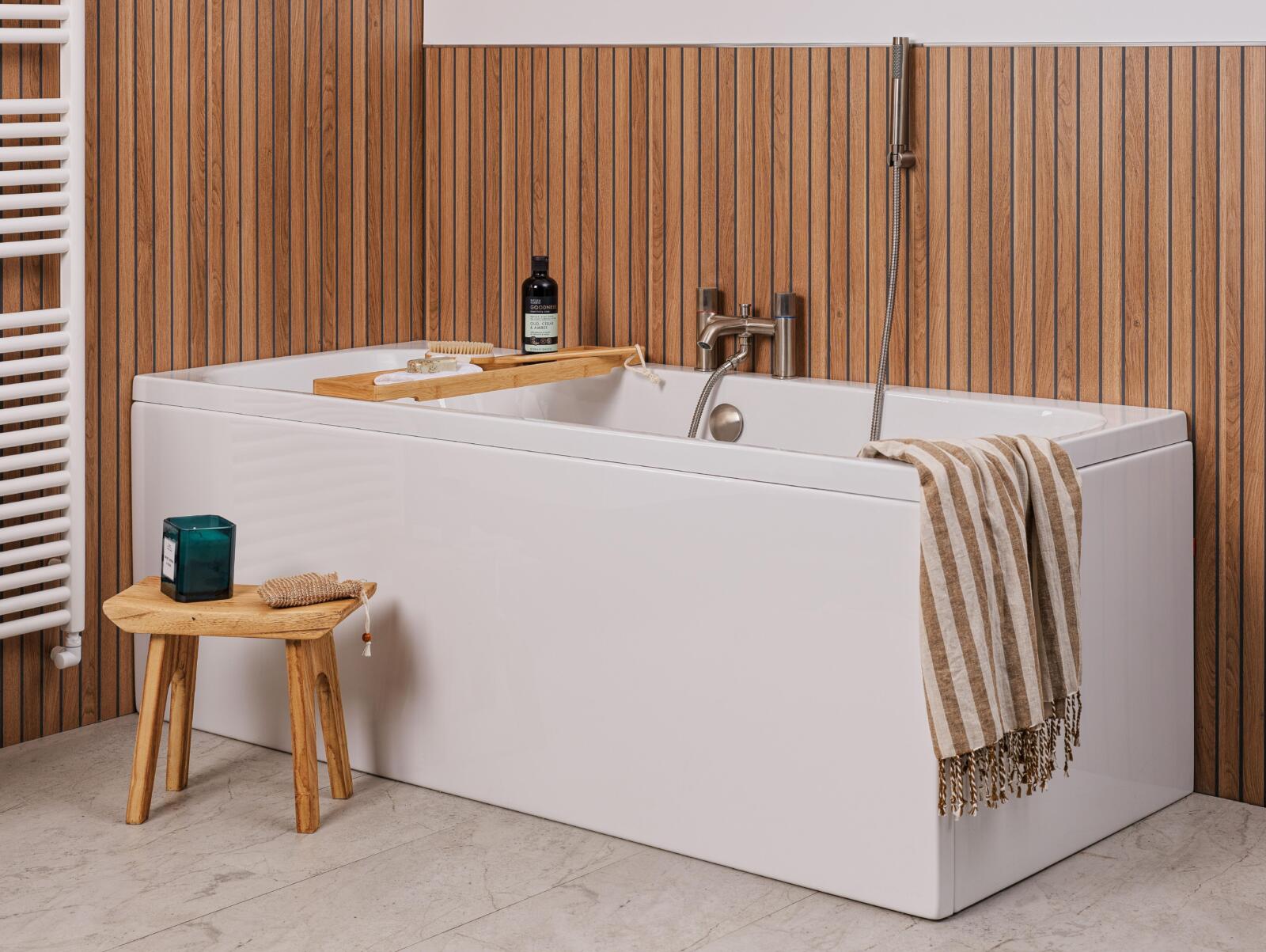
Single ended baths are one of the most common bath styles used within UK bathrooms.
These baths typically feature:
- A rectangular profile
- Waste and overflow positioned at one end
- A sloped backrest at the opposite end
Single ended baths are practical, space-efficient, and available in a wide variety of sizes, making them particularly suitable for:
- Family bathrooms
- Smaller layouts
- Traditional bathroom plans
- Contemporary spaces
They are commonly paired with front and end bath panels to create a clean and integrated appearance.
Double Ended Acrylic Baths
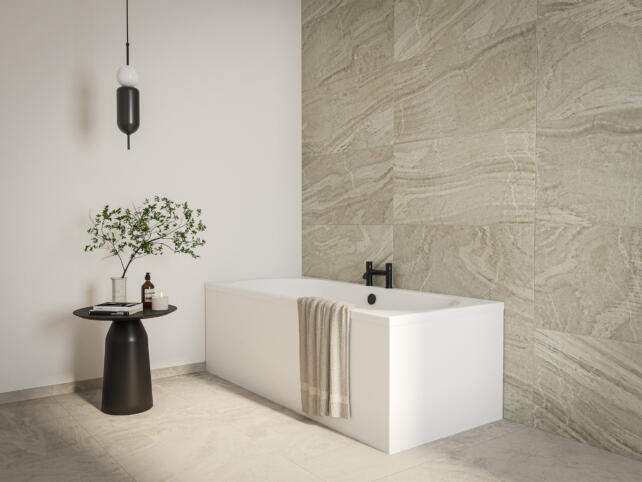
Double ended baths offer a more balanced bathing layout.
Unlike single ended designs, the waste and overflow are positioned centrally, allowing both ends of the bath to incorporate sloped backrests.
Benefits of double ended baths include:
- Greater bathing comfort
- More symmetrical design
- Easier use for two bathers
- Centralised tap positioning
The central positioning of the taps can also make it easier to top up warm water while bathing.
The Angelo Double Ended Bath demonstrates how acrylic can be shaped into softer contemporary forms while maintaining practicality and comfort.
Shower Baths
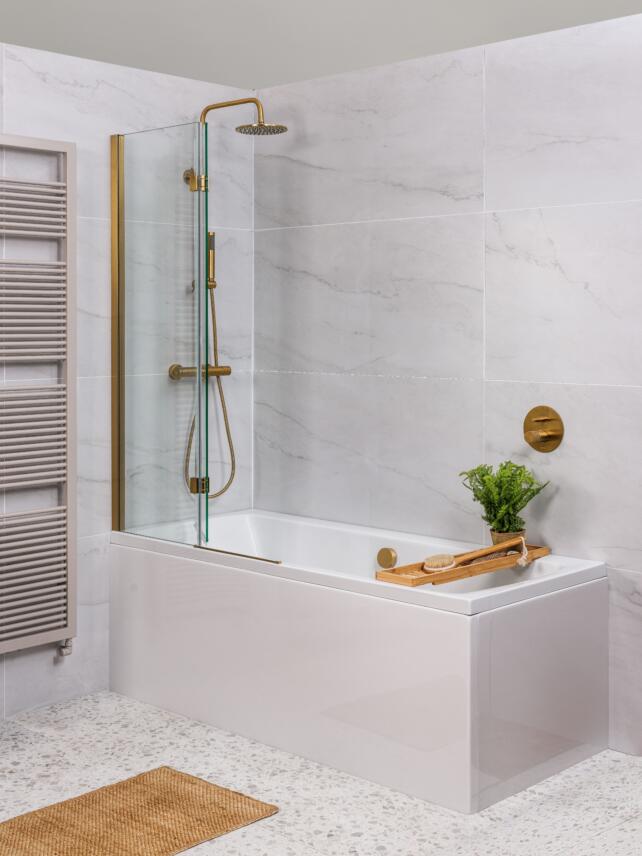
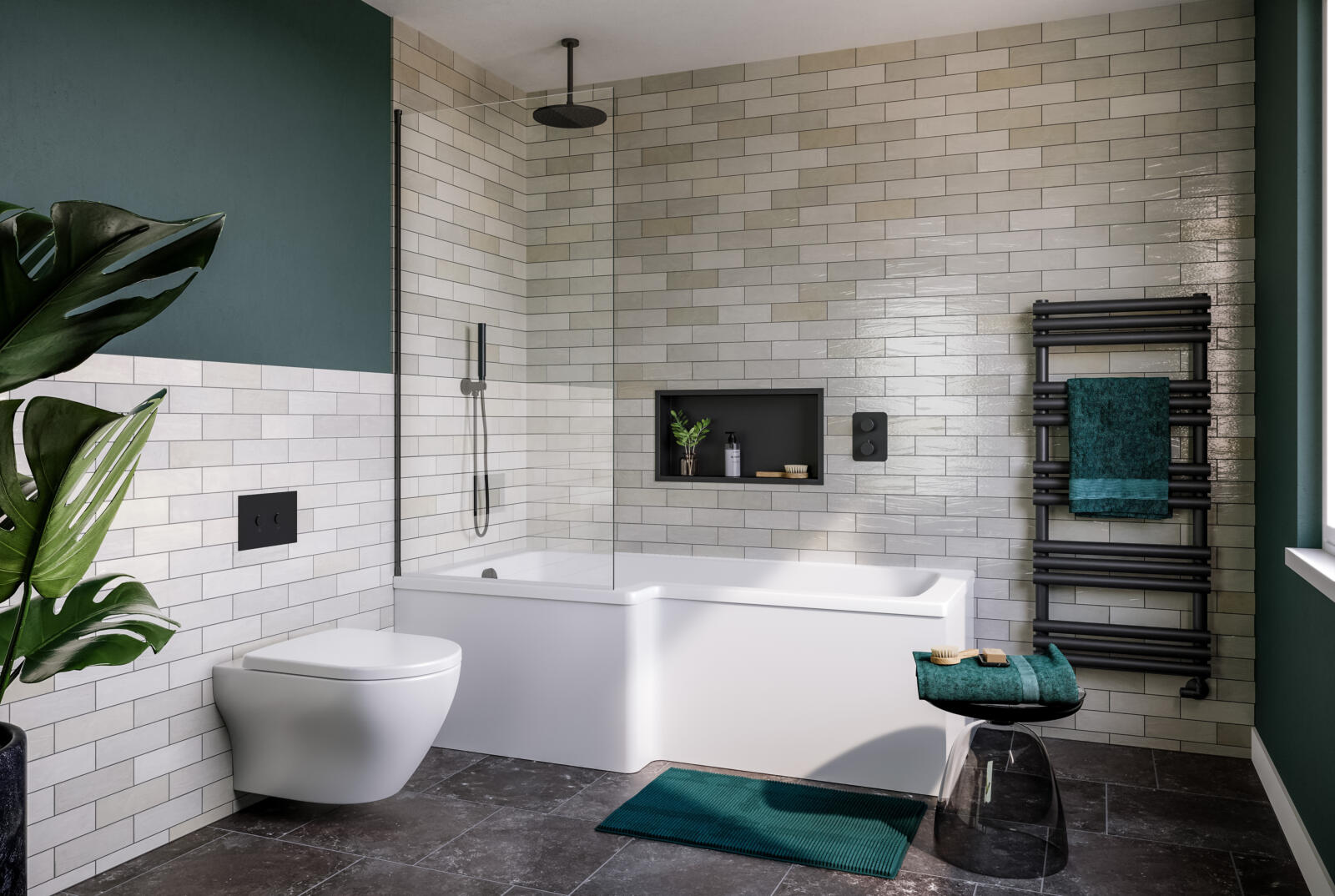
Shower baths are designed for bathrooms where both bathing and showering functions are required within a more compact footprint.
These designs combine:
- A practical showering area
- The comfort of a full bath
- More efficient use of available space
Most shower baths feature a widened section at one end to create additional standing space for showering.
Because of this layout, shower baths are generally available in:
- Left-handed configurations
- Right-handed configurations
making orientation an important consideration during planning.
The Lorenzo Shower Bath is designed to balance bathing comfort with practical showering functionality, making it particularly well suited to family bathrooms and more compact layouts.
Freestanding Acrylic Baths
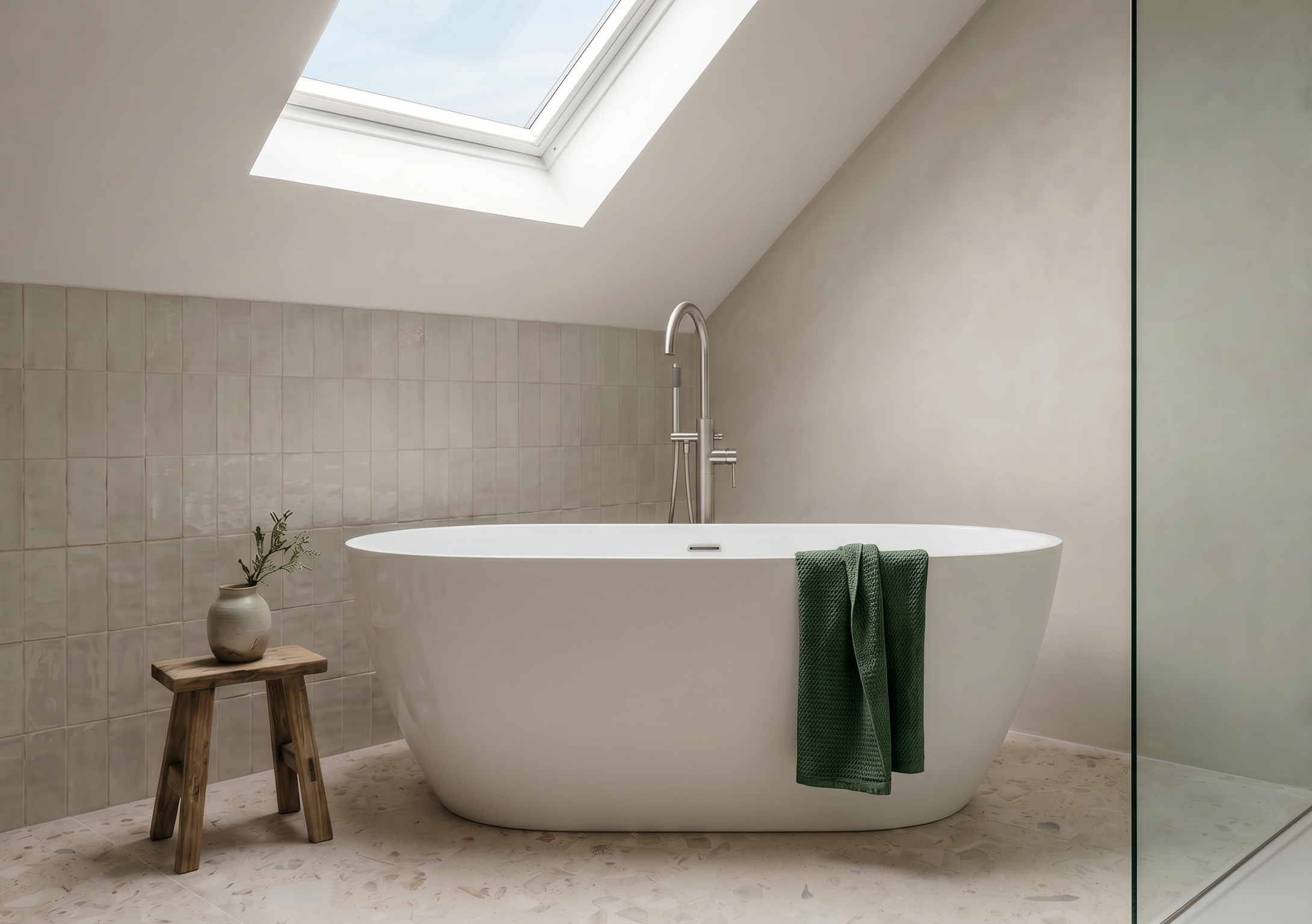
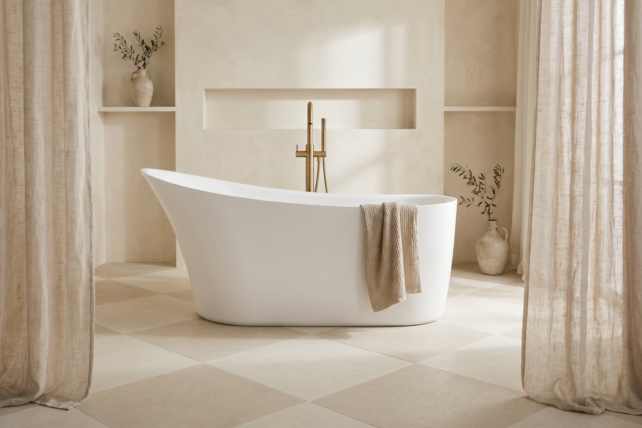
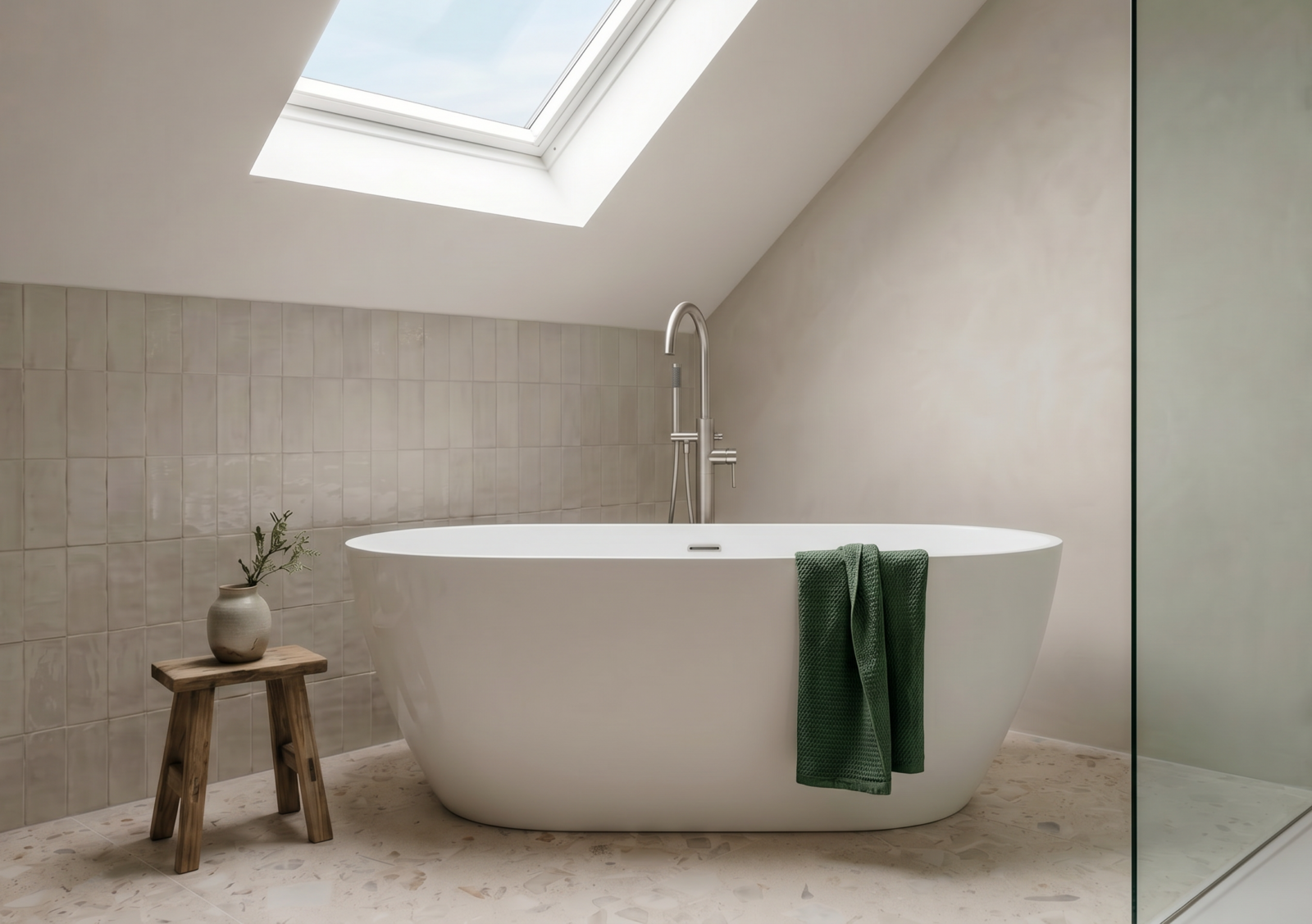
Freestanding baths are often used as focal points within contemporary bathroom design.
Unlike built-in baths, freestanding baths are designed to stand independently within the room, helping create a more open and sculptural appearance.
Benefits of acrylic freestanding baths include:
- Lighter installation weight
- Greater design flexibility
- Easier installation compared to stone baths
- Comfortable bathing ergonomics
- Lower maintenance requirements
Freestanding acrylic baths are commonly used within:
- Larger bathrooms
- Open-plan layouts
- Contemporary bathroom schemes
- Hotel-inspired interiors
Collections such as Tanaro and Angelo combine sculptural forms with reinforced acrylic construction to create baths that feel contemporary while remaining practical for everyday use.
D-Shaped Acrylic Baths
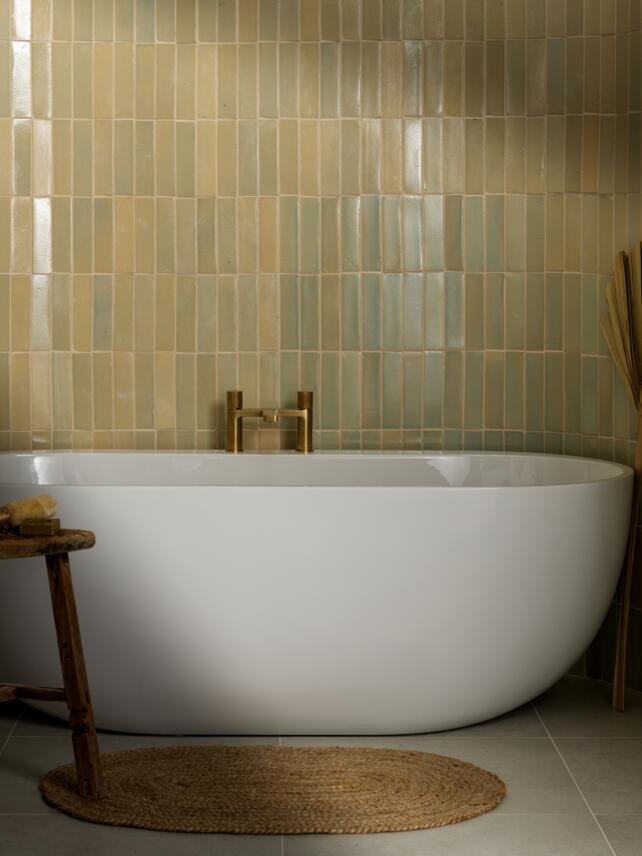
D-shaped baths combine the appearance of a freestanding bath with the practicality of wall installation.
These baths typically feature:
- A curved front profile
- A flat rear edge for wall positioning
- Integrated bath panel construction
D-shaped baths are particularly useful for homeowners who:
- Prefer the look of freestanding baths
- Need to maximise floor space
- Want simpler plumbing arrangements
- Require a more practical layout
Because the rear edge sits flush against the wall, taps can often be mounted directly onto the bath itself, simplifying installation compared to fully freestanding designs.
Preventing Bath Panel Discolouration
Lower quality bath panels can sometimes become discoloured or yellow over time, particularly when manufactured using lower-grade materials.
This can occur due to:
- UV exposure
- Heat
- Material ageing
- Moisture conditions
Tissino bath panels are manufactured using Perma Bianco technology, designed to resist discolouration and maintain a consistent white finish over time.
Perma Bianco construction combines:
- Reinforced acrylic surfaces
- Resin reinforcement
- Structural core support
helping improve rigidity, durability, and long-term appearance retention.
Acrylic Baths Compared with Steel Baths
Acrylic and steel remain two of the most commonly specified bath materials, though they differ in several areas.
Acrylic Baths
- Lightweight
- Warmer surface feel
- Easier installation
- More shape flexibility
- Easier minor surface repair
- Wider range of styles
Steel Baths
- Heavier construction
- Strong surface resistance
- Cooler surface feel
- Greater heat conductivity
- More rigid material structure
Modern reinforced acrylic baths now offer strong durability while retaining the comfort and design flexibility that make acrylic so widely used.
Choosing the Right Acrylic Bath
The most suitable acrylic bath depends on:
- Bathroom size
- Layout requirements
- Everyday usage
- Design preferences
- Installation considerations
For example:
- Single ended baths work well in practical family bathrooms
- Double ended baths improve bathing comfort
- Shower baths maximise functionality in smaller spaces
- Freestanding baths create stronger focal points
- D-shaped baths balance practicality with softer styling
Understanding the strengths of each design helps create bathrooms that feel both functional and visually resolved.
Why Acrylic Baths Continue to Be a Practical Choice
Acrylic baths remain one of the most versatile and practical bathing solutions available.
Their combination of:
- Comfort
- Durability
- Design flexibility
- Easier maintenance
- Broad style availability
makes them suitable for a wide range of bathroom projects.
Whether creating a compact family bathroom or a larger contemporary bathing space, reinforced acrylic baths continue to offer a dependable and visually flexible solution for modern bathroom design.
About Acrylic Baths
Frequently Asked Questions
An acrylic bath is manufactured using vacuum-formed acrylic sheets reinforced with structural materials such as fibreglass resin for additional strength and durability.
Yes. High-quality reinforced acrylic baths are designed for long-term durability and everyday use.
Single ended baths position the waste and overflow at one end, while double ended baths position them centrally to allow comfortable bathing at both ends.
Both materials offer advantages. Acrylic baths are lighter, warmer to the touch, easier to install, and available in a broader range of shapes and styles.
Minor surface marks can occur over time, though many small scratches can often be polished or repaired relatively easily.
Lower-quality bath panels can discolour over time due to UV exposure, heat, and material ageing. Technologies such as Perma Bianco are designed to help resist this discolouration.